
How Ultra High Net Worth Investors Build Wealth
Ultra-high-net-worth investors — broadly defined as families and individuals with $30 million or more in investable assets — build and preserve wealth in ways that diverge fundamentally from the approaches available to or used by the general investing public. The differences are not primarily about access to better stock picks, more sophisticated market forecasting, or higher trading frequency. They are structural. UHNW wealth is built through systems: coordinated frameworks that address portfolio construction, tax management, risk governance, generational continuity, and philanthropic integration simultaneously — not as separate planning exercises but as a unified financial ecosystem designed to compound durably across decades and family generations.
The closest institutional analogy is the university endowment model — large pools of capital managed with multi-decade time horizons, formal investment policy frameworks, defined liquidity tiering, diversification across public and private markets, and risk management systems that prioritize surviving adverse market conditions over maximizing short-term performance. Many UHNW families have adopted versions of this model because it produces the outcome they care most about: not the highest possible annual return in any given year, but sustained, compounding, inflation-adjusted wealth that remains intact for children and grandchildren. At Diversified Insurance Brokers, our Concierge Wealth Services division helps qualified individuals explore educational resources and, where appropriate, request introductions to independent fiduciary investment professionals who specialize in these frameworks. Our resource on institutional-grade portfolio construction covers the foundational design principles, and our overview of curated investment access explains how qualified investors may access strategies typically reserved for institutional participants.
Confidential Wealth Strategy Conversation
High-net-worth and accredited investors can request an introduction review through our Concierge Wealth Services qualification process.
Request Qualification ReviewCall 800-533-5969
The Foundational Mindset Difference: Systems Over Predictions
The most persistent misconception about UHNW wealth building is that it involves superior market forecasting — knowing which sectors will outperform, identifying undervalued companies before the market does, or timing entries and exits more precisely than other investors. Research consistently shows the opposite: the investment activities that most distinguish UHNW wealth management from retail investing are structural and behavioral, not analytical and predictive.
Written investment policy frameworks are one of the clearest structural distinctions. UHNW families typically operate with documented, board-level investment policies that define strategic asset allocation targets, permissible asset classes, rebalancing triggers, liquidity requirements, and risk limits. These policies function as a constitutional framework for investment decisions — they establish what the family has collectively agreed to do with capital, under what conditions allocations can change, and what requires formal review versus what falls within delegated authority. This structure removes individual emotional responses from the investment decision process, which is where most retail wealth destruction occurs.
Behavioral discipline is the complementary element. Our resource on behavioral biases that quietly destroy wealth covers the specific cognitive patterns — loss aversion, recency bias, overconfidence, herding — that produce the largest performance gaps between what markets return and what investors actually receive. UHNW families and institutional investors spend significant effort designing systems that reduce these biases’ influence on actual capital allocation decisions, not because UHNW investors are psychologically superior, but because they have experienced enough market cycles to recognize that emotional responses at market extremes are reliably destructive. Our resource on how smart investors manage risk without sacrificing growth covers the practical risk management frameworks that enable emotional discipline during volatility.
How UHNW Portfolios Are Structured: The Four Functional Layers
UHNW portfolio construction typically organizes capital into functional layers based on time horizon, liquidity need, and risk-return objective. This layered structure is conceptually different from a percentage allocation to broad asset classes — it begins with the purpose the capital serves and works backward to the instruments that serve that purpose most efficiently.
The liquidity reserve layer holds capital that may need to be accessed quickly — for living expenses, business opportunities, family events, or financial emergencies — without requiring asset sales at potentially unfavorable prices. This layer is held in short-duration, high-quality instruments and sized to cover defined short-term needs without touching the rest of the portfolio. Its purpose is to prevent the forced selling that turns temporary market stress into permanent capital impairment. The size of this layer depends on the family’s ongoing cash needs relative to the total portfolio.
The income and stability layer holds assets that generate predictable, recurring cash flows — investment-grade fixed income, dividend-producing equity, real estate generating rental income, and in many UHNW portfolios, fixed and indexed annuities that provide guaranteed income independent of market performance. This layer provides the financial floor that allows the rest of the portfolio to remain invested in growth assets through market cycles without creating spending anxiety. Our resource on MYGA annuity strategies for affluent individuals covers how guaranteed fixed-rate instruments fit within larger UHNW portfolios as stability-layer components, and our guide on life insurance strategies the wealthy use covers how permanent life insurance structures serve stability, tax efficiency, and legacy functions simultaneously within UHNW financial ecosystems.
The growth layer holds assets expected to produce long-term capital appreciation — diversified equity, growth-oriented private equity, real assets with appreciation potential, and other instruments where the investment thesis is compounding over 5 to 15-plus year horizons rather than generating near-term income. This layer accepts more volatility because the liquidity reserve and income layers provide the financial stability that allows growth assets to remain invested through market drawdowns without being liquidated to fund current needs.
The opportunistic layer holds capital earmarked for deployment during market dislocations — situations where asset prices have fallen far enough below intrinsic value estimates that the risk-reward ratio becomes unusually attractive. UHNW families and institutional investors who maintain a dedicated opportunistic allocation are positioned to act as buyers when distressed markets force other investors to sell, which is the classic mechanism for generating outperformance over full market cycles. This layer is deliberately unfilled in normal markets and deployed selectively when specific dislocations create the right conditions.
Private Markets: Why UHNW Portfolios Look Different from Retail Portfolios
One of the most visible structural differences between UHNW portfolios and typical retail investment portfolios is the private market allocation. Major endowments and UHNW families commonly allocate 30% to 50% or more of total assets to private markets — private equity, private credit, private real estate, infrastructure, and specialized real asset strategies. Retail investors typically hold 0% to 5% in these categories, not because of different views on their merits but because most private market investments have minimum investment requirements, lock-up periods, and regulatory eligibility requirements (accredited investor and qualified purchaser standards) that make them inaccessible or unsuitable for typical household portfolios.
The rationale for private market allocation is not speculation — it is diversification of return drivers and access to return streams not available in public markets. Private equity investments in operating businesses create value through operational improvement, strategic transformation, and financial restructuring over 5 to 10-year ownership cycles that public markets — with their quarterly earnings pressure and continuous price-setting — cannot easily replicate. Private credit provides corporate and real estate lending returns not available in publicly traded bond markets. Infrastructure provides long-duration cash flow from essential physical assets with contractual revenue streams. These return drivers have different correlations to public equity market volatility, which is precisely why institutional portfolio construction models value them for diversification alongside return enhancement. Our resource on the rise of private market opportunities once reserved for institutions covers how qualified investors can now access some private market strategies that were previously institutional-only. Our resource on alternative investments the wealthy use and our guide on what the wealthy invest in beyond the stock market provide the broader alternative investment landscape overview.
Tax Architecture: The Highest-Leverage Wealth Lever Available
At UHNW wealth levels, the annual tax burden frequently represents the single largest annual expense the family incurs — exceeding investment management fees, living expenses, and charitable giving combined in many cases. This arithmetic makes tax architecture — the systematic design of investment structures, entity relationships, timing decisions, and asset location to minimize tax drag on compounding — one of the highest-leverage wealth-building activities available, often producing more incremental wealth than marginal improvement in gross investment returns.
The mathematics of tax deferral illustrates the leverage clearly. A dollar that compounds at 8% annually for 30 years in a taxable account — with 25% annual tax on gains — grows to approximately $6.85. The same dollar compounding at 8% for 30 years in a tax-deferred structure grows to approximately $10.06. The tax deferral produces 47% more terminal wealth at the same gross return rate, simply by eliminating the annual tax friction that reduces the compounding base each year. Our resource on how tax deferral creates generational compounding covers this mathematics in full and explains how different tax-deferred structures function at different wealth levels. Our guide on how the wealthy minimize taxes covers the specific strategies — entity structures, trust planning, asset location, charitable vehicles — that provide the largest tax efficiency improvements at UHNW wealth levels.
Tax-loss harvesting at the portfolio level — systematically realizing capital losses to offset gains across the portfolio — is another institutional practice that UHNW families implement systematically through their investment management relationships. The tax alpha generated by disciplined loss harvesting can represent a meaningful annual return advantage relative to non-tax-managed portfolios with identical pre-tax returns, compounding significantly over decades. The stretch IRA ten-year rule and its implications for intergenerational wealth transfer through qualified accounts is another dimension of tax architecture that UHNW families coordinate through estate and investment planning.
Risk Management Before Return Optimization
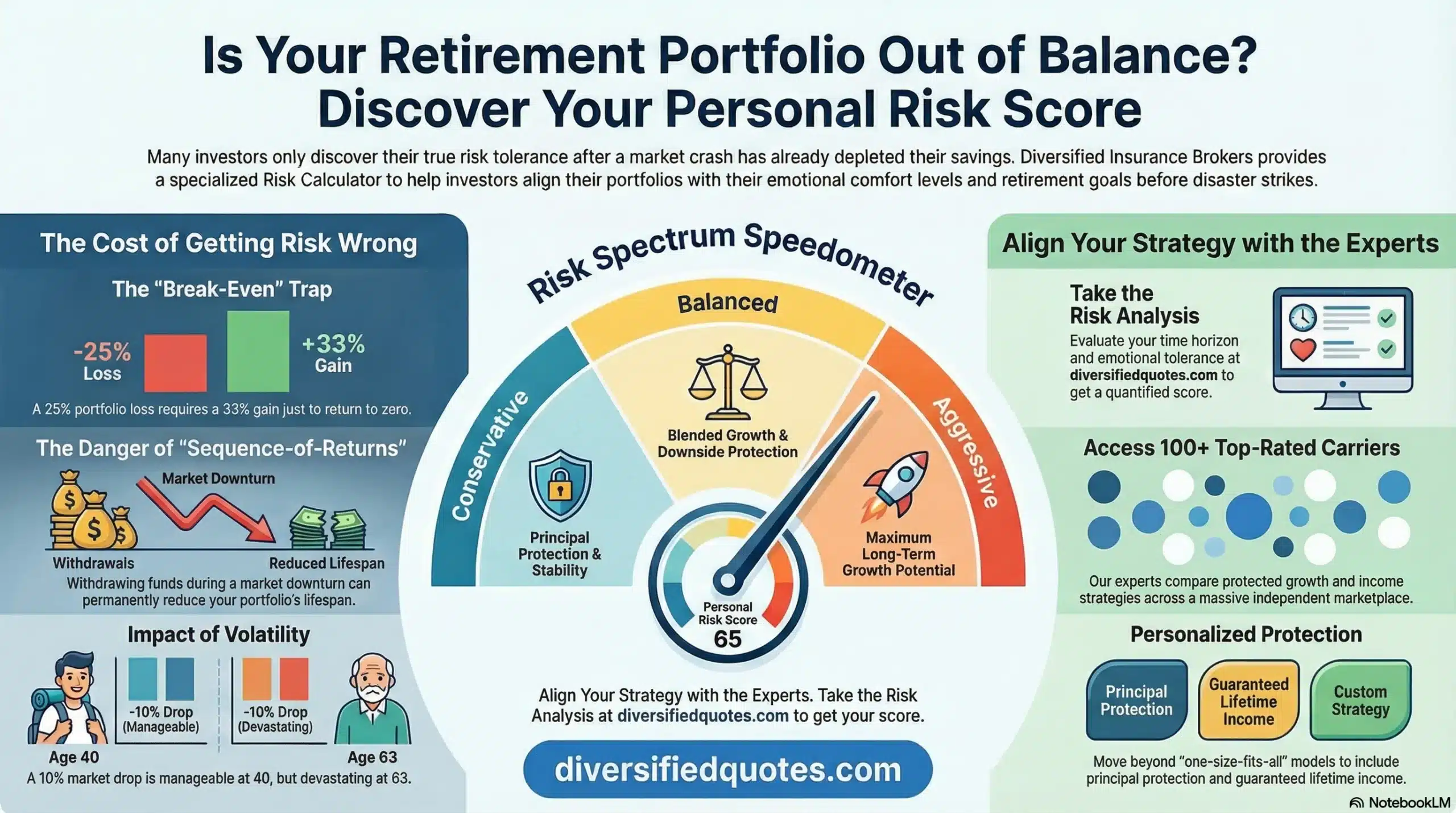
The sequence of priorities in UHNW portfolio design — risk management before return optimization — reflects a fundamental asymmetry in wealth preservation math. A 50% loss requires a 100% gain to recover. A 25% loss requires a 33% gain. The mathematics of drawdown recovery mean that preventing large losses is financially more valuable than capturing large gains, particularly at wealth levels where the primary objective shifts from accumulation to preservation and compounding. Managing downside risk is not risk aversion — it is recognition that catastrophic drawdowns permanently impair wealth trajectories in ways that subsequent recoveries cannot fully repair.
UHNW risk management frameworks typically include portfolio stress testing — modeling portfolio behavior across historical and hypothetical adverse scenarios (2008-type credit crisis, 2000-type technology correction, 1970s-type inflation environment, 2020-type pandemic shock) to understand maximum expected drawdown ranges and recovery timelines. Our resource on downside protection strategies in bear markets covers the specific instruments and structural approaches used to limit downside in UHNW portfolios. Our resource on quantitative risk management covers the analytical frameworks used for systematic risk monitoring and management. And our resource on institutional investing secrets the ultra-wealthy use covers the institutional-level approaches that UHNW families adopt from endowment and sovereign wealth fund management models.
Family Governance: Protecting Wealth Across Generations
The first generation builds wealth. The second generation manages it. The third generation frequently depletes it — the proverbial “shirtsleeves to shirtsleeves in three generations” pattern documented across cultures and centuries. UHNW family governance frameworks are specifically designed to interrupt this pattern by institutionalizing the values, decision structures, and financial disciplines that produced and sustained the wealth in a form that can be transmitted to heirs along with the capital itself.
Formal family governance typically includes investment policy statements that define the portfolio’s strategic purpose and allocation guidelines, distribution policies that define how and when capital flows to family members and under what conditions, family council or investment committee structures that provide formal decision-making forums separate from individual family relationships, and education programs that develop financial literacy and wealth stewardship competence in the next generation before they receive significant assets. Our resource on how the wealthy stay wealthy covers the governance, behavioral, and structural elements that distinguish wealth-preserving families from those that follow the three-generation depletion pattern.
Trust structures — revocable living trusts, irrevocable trusts of various types, dynasty trusts, charitable remainder trusts, and specialized vehicles like grantor retained annuity trusts (GRATs) and spousal lifetime access trusts (SLATs) — are the legal architecture through which most UHNW families implement governance, estate planning, and wealth transfer objectives simultaneously. These structures serve as the containers within which investment portfolios operate, and they interact with tax planning, estate planning, and philanthropic objectives in ways that require coordinated professional guidance from legal, tax, and investment advisors working in alignment. Our resource on what a fiduciary is explains the professional standard that investment advisors in these coordinated relationships should meet, and our guide on when to meet with a financial advisor provides the broader framework for identifying when professional coordination creates measurable value.
Philanthropy as an Integrated Wealth Strategy
At UHNW wealth levels, philanthropy frequently transitions from an optional personal expression to a formally integrated component of the overall wealth strategy — one that simultaneously advances family values, creates shared mission across generations, and optimizes the family’s tax position in ways that simple charitable giving cannot achieve. Structured giving vehicles — donor-advised funds, private foundations, charitable lead trusts, and charitable remainder trusts — allow families to align their giving with their investment and estate planning rather than treating each as independent activities.
A charitable remainder trust, for example, can simultaneously provide a current-year income tax deduction, fund charitable giving at the end of the trust term, and provide income to family members for the trust’s duration — creating a tax, income, and legacy planning trifecta from a single structure. A private foundation provides not only charitable giving infrastructure but also meaningful engagement for the next generation, investment management for charitable capital, and potentially family employment for family members involved in foundation administration. These vehicles require professional design and ongoing management, but the financial and family integration value they provide at UHNW wealth levels substantially exceeds their administrative cost.
The integrated nature of UHNW wealth planning — where investment management, tax planning, estate planning, philanthropic strategy, family governance, and risk management are all designed around a unified objective rather than optimized independently — is the defining characteristic that separates UHNW wealth management from typical financial advisory services. Our Concierge Wealth Services overview explains how qualified individuals can explore these integrated frameworks and, where appropriate, request introductions to independent fiduciary professionals who specialize in UHNW-level coordination. Our resource on beyond insurance: exclusive wealth strategies covers the broader landscape of planning approaches available to qualified high-net-worth and ultra-high-net-worth individuals. For qualified investors interested in understanding their own risk profile as a starting point for portfolio conversation, the Investment Risk Analyzer provides a structured starting framework.
Private Consultation Request
Request a confidential evaluation to determine whether advanced portfolio coordination frameworks are appropriate for your situation.
Request Qualification ReviewImportant Notice: Diversified Insurance Brokers does not provide investment advice or securities recommendations. Educational content and coordination services are provided for informational and evaluation purposes only. Qualified individuals may be introduced to independent fiduciary advisers who operate under their own regulatory and compliance frameworks. Any investment decisions should be made in consultation with licensed investment professionals operating under their own fiduciary obligations.
Related Wealth Strategy Insights
Institutional and ultra-high-net-worth strategy frameworks from Diversified Insurance Brokers Concierge Wealth Services.
Financial Protection Essentials
Tax strategy, generational compounding, private market access, and wealth preservation resources from Diversified Insurance Brokers.
Request a Confidential Conversation
📞 Call us at 800-533-5969
or visit our Contact Page
Important: We do not provide securities or investment advice. If appropriate, we may introduce you to an independent SEC-registered investment adviser for evaluation under their regulatory framework.
Frequently Asked Questions
What qualifies someone as ultra-high-net-worth?
Ultra-high-net-worth (UHNW) typically refers to individuals or families with $30 million or more in investable assets, though definitions vary by institution, jurisdiction, and context. Some definitions place the threshold at $25 million; others use $50 million as the entry point for UHNW designation, distinguishing it from the broader high-net-worth (HNW) category that typically starts at $1 million in investable assets. For regulatory and investment access purposes, the more relevant thresholds are the SEC’s accredited investor standard (net worth exceeding $1 million excluding primary residence, or income exceeding $200,000 individually/$300,000 jointly) and qualified purchaser status ($5 million or more in investments), which determine eligibility for certain private market investment opportunities. Our resource on what an accredited investor is explains the specific regulatory eligibility standards and what they allow investors to access.
How do ultra-high-net-worth investors build wealth differently?
The differences are structural and behavioral, not primarily analytical. UHNW wealth building is characterized by long-term financial ecosystems rather than individual investment decisions — coordinated frameworks that integrate portfolio construction, tax management, risk governance, generational planning, and philanthropic strategy simultaneously. Written investment policy frameworks define strategic allocation targets and risk limits as institutional-style governance rather than leaving decisions to individual judgment at market inflection points. Private market allocations access return streams not available in public markets. Tax architecture systematically minimizes annual tax drag on compounding. Risk management prioritizes surviving adverse conditions over maximizing bull market returns. And governance structures institutionalize the values and decision disciplines that need to survive across generations.
The closest analogy is the university endowment model — multi-decade time horizons, formal policy frameworks, disciplined liquidity management, and diversification across public and private markets. Our resource on institutional investing secrets the ultra-wealthy use covers the specific frameworks borrowed from endowment and institutional management models.
Do wealthy investors rely mostly on the stock market?
Many UHNW portfolios include substantial public market allocations, but the defining characteristic of sophisticated UHNW portfolio construction is meaningful private market diversification alongside public markets. Major endowments and UHNW families commonly allocate 30% to 50% or more of total assets to private markets — private equity, private credit, infrastructure, and real asset strategies — specifically because these asset classes provide return drivers with different correlations to public equity volatility and access to sectors and structures not available in publicly traded markets.
This is not speculation — it is institutional diversification of return sources. Private equity creates value through operational improvement over 5 to 10-year ownership cycles that public markets’ quarterly reporting pressure cannot replicate. Private credit provides lending returns at spreads not available in public bond markets. Infrastructure provides long-duration contracted cash flows from essential assets. The combination of public and private allocations produces a more diversified, less correlated return stream than public-only portfolios — which is precisely why institutional investors with long time horizons use this structure. Our resources on alternative investments the wealthy use and what the wealthy invest in beyond the stock market cover the specific alternative asset categories in the UHNW allocation landscape.
Why is tax efficiency so important for wealthy investors?
At UHNW wealth levels, annual taxes frequently represent the single largest annual expense — often exceeding investment fees, living expenses, and charitable contributions combined. This arithmetic transforms tax architecture from a planning afterthought into one of the highest-leverage financial activities available, because marginal improvements in tax efficiency can produce more incremental compounded wealth over decades than marginal improvements in gross investment returns.
The compounding mathematics make this concrete. A dollar compounding at 8% annually for 30 years in a fully taxable account — with 25% annual tax on gains — grows to approximately $6.85. The same dollar at 8% for 30 years in a tax-deferred structure grows to approximately $10.06. Tax deferral alone produces 47% more terminal wealth at the same gross return rate. UHNW families systematically pursue this advantage through entity structures, trust planning, asset location decisions, tax-loss harvesting, charitable vehicles, and strategic timing of income recognition. Our resource on how tax deferral creates generational compounding explains the mathematics in full, and our guide on how the wealthy minimize taxes covers the specific strategies.
What role does risk management play in ultra-wealthy portfolios?
Risk management typically comes before return optimization in UHNW portfolio design — a sequencing that reflects the asymmetric mathematics of drawdown recovery. A 50% loss requires a 100% gain to recover. A 25% loss requires a 33% gain. At wealth levels where the primary objective has shifted from accumulation to preservation and compounding, preventing catastrophic drawdowns is mathematically more valuable than capturing peak returns in strong markets, because severe drawdowns permanently impair the compounding base in ways that subsequent recoveries cannot fully repair.
UHNW risk management frameworks typically include portfolio stress testing across historical and hypothetical adverse scenarios, volatility targeting at the portfolio level, formal risk limit frameworks defined in investment policy statements, and liquidity tiering that prevents forced selling during market stress. These frameworks don’t attempt to predict when crises will occur — they design portfolios to withstand multiple types of potential disruptions. Our resource on downside protection strategies in bear markets and our guide on quantitative risk management cover the specific risk management tools and frameworks in detail.
Do ultra-high-net-worth investors use private market investments?
Yes — typically in significant proportions that would surprise investors accustomed to typical retail portfolio construction. Many UHNW families allocate 30% to 50% or more of total investable assets to private markets across several categories: private equity (ownership stakes in operating businesses managed over 5 to 10-year investment horizons), private credit (direct lending and other non-bank credit strategies), private real estate (direct property ownership and real estate private equity), infrastructure (ownership of essential assets like toll roads, utilities, and renewable energy facilities), and other specialized real asset strategies. These allocations are made to access return drivers not available in public markets and to reduce the portfolio’s correlation to daily public market volatility. Our resource on the rise of private market opportunities once reserved for institutions explains how qualified investors may now access some of these strategies that were previously institutional-only.
What is family governance in wealth management?
Family governance refers to the structured frameworks — written policies, formal decision-making bodies, distribution rules, education programs, and succession plans — that define how UHNW families collectively make decisions about, manage, distribute, and transmit wealth across generations. It is governance in the literal corporate sense: not informal family discussion about money, but formal structures with defined authority, documented policies, and systematic processes.
Governance typically includes written investment policy statements defining strategic allocation targets and risk limits; distribution policies defining when and how capital flows to family members; family councils or investment committees providing formal decision forums; financial education programs developing next-generation wealth stewardship competence; and succession plans defining leadership transitions. These structures exist because the “shirtsleeves to shirtsleeves in three generations” pattern — documented across cultures and centuries — reflects governance failures rather than inevitable wealth dissipation. Families that institutionalize the values and decision disciplines that produced and sustained their wealth interrupt this pattern by transmitting the governance framework along with the capital itself. Our resource on how the wealthy stay wealthy covers these governance elements in detail.
How do wealthy families think about generational wealth transfer?
UHNW families typically approach generational wealth transfer as an integrated, multi-dimensional planning exercise that coordinates investment management, estate planning, tax planning, trust structures, and family governance simultaneously — not as separate planning activities optimized independently. Estate planning at the UHNW level uses a range of trust structures — dynasty trusts, grantor retained annuity trusts, spousal lifetime access trusts, charitable lead trusts, and others — to move assets across generations in ways that minimize estate and gift tax while maintaining family access to investment returns and, in many structures, current income.
The objective is typically not to maximize the transfer of the maximum dollar amount to heirs in the minimum tax time — it is to structure wealth transfer in alignment with the family’s governance values and long-term wealth preservation goals, ensuring that inheritors receive capital alongside the financial education, governance frameworks, and stewardship expectations that give them the best chance of preserving and growing what they receive. Our resource on the stretch IRA ten-year rule covers one specific dimension of qualified account wealth transfer planning, and our resource on what a fiduciary is explains the professional standard that advisors coordinating these planning activities should meet.
Can high-net-worth investors access institutional investment strategies?
Qualified investors — those meeting accredited investor, qualified purchaser, and in some cases qualified institutional buyer standards — may be eligible to evaluate investment strategies and structures typically used by institutions. Regulatory eligibility requirements under SEC Regulation D, the Investment Company Act, and related frameworks define which investor types can participate in which types of private market offerings, hedge funds, private equity funds, and other institutional investment vehicles. These thresholds exist to limit access to strategies with different liquidity, disclosure, and risk profiles than publicly registered investments to investors with the financial sophistication and capital resources to evaluate and bear those differences appropriately.
Through Concierge Wealth Services, qualified individuals may request introductions to independent SEC-registered fiduciary advisers who specialize in institutional-level portfolio design. Our resource on what an accredited investor is provides the specific eligibility criteria, and our Concierge Wealth Services overview explains the qualification and introduction process.
What is the role of Concierge Wealth Services?
Concierge Wealth Services helps qualified individuals explore educational resources related to institutional-level portfolio construction, risk management, private market access, and advanced tax and estate planning frameworks — and, where appropriate, request introductions to independent SEC-registered fiduciary investment professionals who operate under their own regulatory and compliance obligations. Diversified Insurance Brokers does not provide investment advice, manage investment portfolios, or recommend specific securities. The role of Concierge Wealth Services is to bridge the gap between the insurance and protection planning expertise that Diversified Insurance Brokers provides and the investment advisory expertise of independent fiduciary professionals who specialize in UHNW-level coordination.
For qualified individuals who want to explore whether advanced portfolio coordination frameworks are appropriate for their situation, the process begins with a confidential qualification review request. Our beyond insurance: exclusive wealth strategies resource provides the broader context for how protection planning and advanced wealth planning intersect at high net worth levels.
Browse More How to Build Wealth Guides
About the Author:
Jason Stolz, CLTC, CRPC, DIA, CAA and Chief Underwriter at Diversified Insurance Brokers (NPN 20471358), is a senior insurance and retirement professional with more than 25 years of real-world experience helping individuals, families, and business owners protect their income, assets, and long-term financial stability. As a long-time partner of the nationally licensed independent agency Diversified Insurance Brokers, Jason provides trusted guidance across multiple specialties—including fixed and indexed annuities, long-term care planning, personal and business disability insurance, life insurance solutions, Group Health, Travel Medical and Evacuation Insurance, and short-term health coverage. Diversified Insurance Brokers maintains active contracts with over 100 highly rated insurance carriers, ensuring clients have access to a broad and competitive marketplace.
His practical, education-first approach has earned recognition in publications such as VoyageATL, and contributions from his agency featured in Kiplinger and GoBankingRates— highlighting his commitment to financial clarity and client-focused planning. Drawing on deep product knowledge and years of hands-on field experience, Jason helps clients evaluate carriers, compare strategies, and build retirement and protection plans that are both secure and cost-efficient. Visitors who want to explore current annuity rates and compare options across multiple insurers can also use this annuity quote and comparison tool.
Browse All Insurance & Annuity Resources: Return to our complete Insurance & Annuity FAQs hub — annuity products, supplemental insurance, life insurance, health, dental, vision & wealth strategies.
Last Reviewed: May 19, 2026 |
Reviewed by: Jason Stolz, CLTC, CRPC, DIA, CAA
Chief Underwriter, Diversified Insurance Brokers, Inc. | NPN: 20471358 | Diversified Insurance Brokers, Inc. — Licensed in all 50 states
Fact Checked by: Tonia Pettitt, CMIP©
Medicare Specialist, Diversified Insurance Brokers, Inc. | NPN: 14374308 | Diversified Insurance Brokers, Inc. — Licensed in all 50 states
Did you find this content helpful? Leave us a Google review — it helps others find trustworthy guidance too.
Editorial Standards: Diversified Insurance Brokers maintains rigorous editorial standards to ensure accuracy, clarity, and independence in all content. Learn more about our editorial standards and commitment to transparency.
